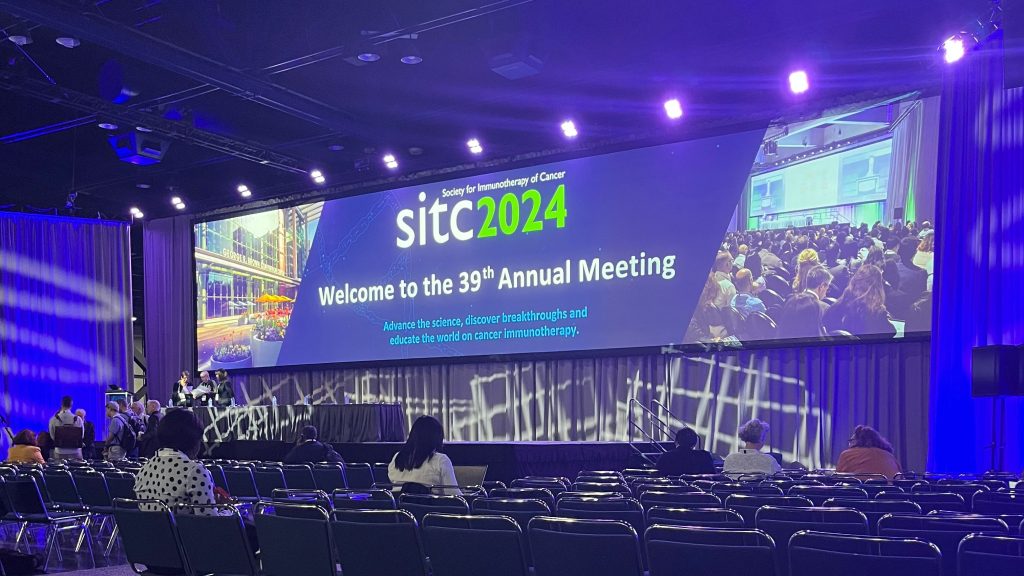
In November 2024, I attended my first-ever research conference: the Society for Immunotherapy of Cancer (SITC) Annual Meeting in Houston, Texas. The theme for SITC 2024 was “Advancing Cancer Immunotherapy: From Discovery to Treatment,” a perfect reflection of the rapid innovation happening in the field.
We found out about the conference just a couple of weeks before it started, and although it was too late to submit a poster or present research, I was still incredibly excited to attend. At the time, I had only been working in the UH-Sequencing Core lab for about five months, so my focus was still on learning the deep immunology behind cancer research and preparing to take on a long-term project. I saw this conference as an opportunity to immerse myself, learn from leading experts, and ignite my curiosity — and it absolutely delivered.
Learning at Full Speed
The conference was packed with talks from early morning to evening, each one showcasing different approaches to cancer immunotherapy. Researchers presented work using ex-vivo mouse models, single-cell analyses, spatial profiling of tumor microenvironments, and cutting-edge clinical trial data. It was like a crash course in everything at the forefront of immuno-oncology — and almost all of it was new to me.
Yet despite being overwhelmed at times, I left every session more curious and motivated than the last. This experience opened my eyes to the depth, creativity, and urgency within cancer immunotherapy. The field is moving at full speed, and I realized it’s something I want to dive into more deeply.
Special Experiences and Key Highlights
Because the UH-Sequencing Core and Gene Editing Core partners with 10x Genomics, we were invited to a private event they sponsored during SITC. One of the highlights was hearing Dr. Sneha Ramakrishna from Stanford University present her groundbreaking clinical trial work targeting pediatric diffuse midline glioma (DMG) using CAR-T cell therapy. Hearing about such a devastating disease — and seeing how new, targeted immunotherapies can offer hope — was incredibly moving and inspiring.
Another memorable moment was attending the keynote by Dr. Rafi Ahmed from Emory University School of Medicine. His talk focused on T Cell Exhaustion, a phenomenon critical to understanding immune resistance in cancer. Dr. Ahmed explained complex immunology concepts so clearly that everyone in the room, regardless of background, could follow and engage. Sitting in the audience was also Dr. Steven Rosenberg from the National Cancer Institute — a giant in the field — who presented the 2024 Steven A. Rosenberg Scholar Award. Being in the same room as these legends of cancer research was surreal and motivating.
Beyond the formal talks, we also explored the vendor exhibits, where biotech companies showcased tools essential for cutting-edge research: antibodies, platforms for ex vivo studies, and vaccine development technologies — many of which directly tie into the work I am involved in at the UH-Sequencing and Gene Editing Core.
Personal Growth and Inspiration
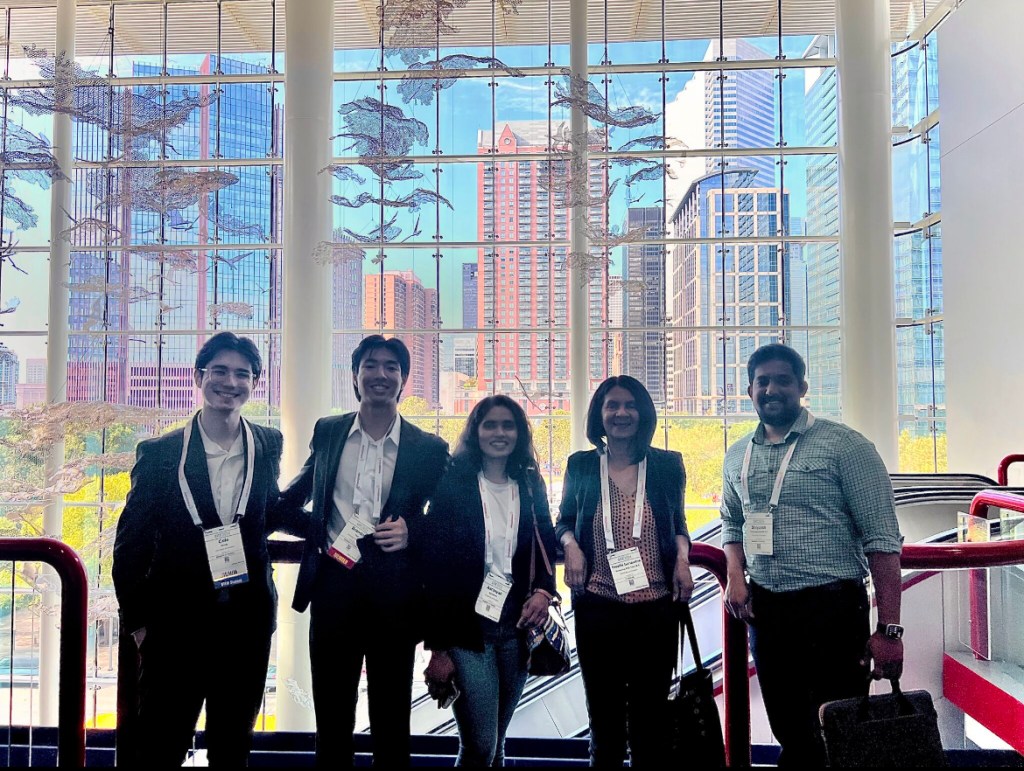
The atmosphere at SITC was electric — hundreds of PhDs, MD/PhDs, researchers, and clinicians from around the world exchanging ideas and pushing science forward. It made me realize how critical advanced education and continuous research are, and how I want to be a part of it not just in the lab, but also in clinical practice.
After the conference ended, I left with two strong realizations:
- First, there is still so much to learn — for me personally and for the field as a whole. But we are making progress every day, and the door to deeper understanding is wide open.
- Second, research and clinical practice are inseparable. Every advancement made in a lab eventually finds its way into hospitals, changing lives. Cancer immunotherapy research today is the frontline of improving patient outcomes tomorrow.
This experience has motivated me to dedicate myself even more to my research in the UH-Sequencing Core, where I am helping to develop targeted mRNA and peptide vaccines for cancer. It also deepened my desire to become a physician-scientist, someone who both treats patients and pushes science forward to make future treatments even better.
Looking ahead, I’m excited to be attending SITC 2025 in National Harbor, Maryland — but this time, I’ll be presenting! I will share my recent discoveries in the development of a broad-spectrum peptide vaccine targeting a novel chimeric RNA, an innovation that holds promise for multiple types of cancers.
Final Reflection
Attending SITC 2024 was more than just going to a conference — it was a pivotal moment. It helped shape my vision of the kind of doctor, scientist, and leader I want to become: someone committed to bridging research and medicine, and working to ensure that scientific discovery always finds its way to improving real patient lives.

 Benchtop to Bedside
Leave a comment